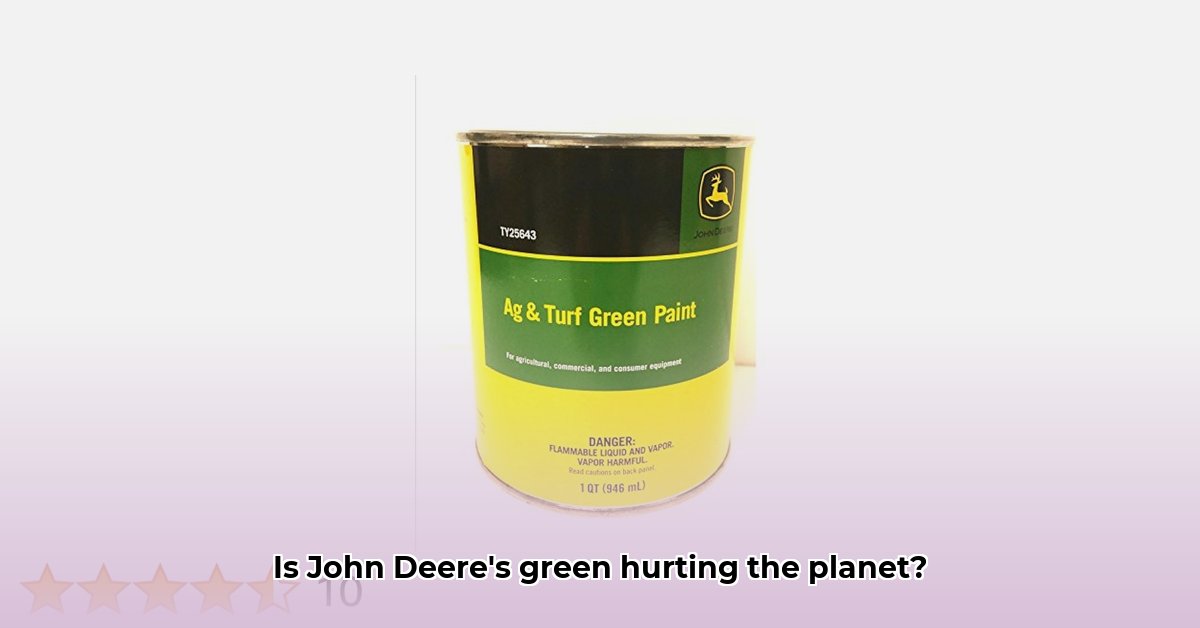
The iconic John Deere green is more than just a brand; it's a symbol of American agriculture. But behind that vibrant hue lies a complex environmental story. Every gallon of paint used on a John Deere tractor, from the smallest utility vehicle to the largest combine, contributes to the overall environmental footprint of modern farming. While John Deere's commitment to sustainable farming practices is widely acknowledged, a comprehensive assessment of its tractor paint's life cycle impact is noticeably absent. This article explores the environmental considerations of John Deere tractor paint, examining its production, longevity, and the industry's push towards greener alternatives. For more on John Deere tractors, see this page.
The Environmental Footprint of Tractor Paint
The production of paint itself is energy-intensive. Traditional paints often rely on volatile organic compounds (VOCs) – chemical substances that evaporate easily and contribute to air pollution and smog. These VOCs are particularly concerning in agricultural areas where machinery is frequently used. Beyond VOCs, the potential presence of heavy metals in some paints further complicates the environmental impact. Disposal poses additional challenges; old paint is hazardous waste, requiring specialized handling and disposal methods. This complete lifecycle – from raw material extraction to manufacturing, application, and disposal – necessitates a thorough assessment. While John Deere’s specific paint formulations remain largely undisclosed, the broader environmental impact of agricultural machinery paint is undeniable. We need concrete data on the composition of their paints to accurately assess their contribution to pollution and waste.
Longevity, Cost, and the Sustainability Equation
A durable paint job translates directly to sustainability. A longer-lasting finish means fewer repaints over the tractor's lifespan, resulting in less paint waste, reduced energy consumption from repeated painting processes, and lower costs for the farmer. However, a robust analysis of John Deere paint's durability and its economic implications is currently unavailable. While a premium, longer-lasting paint may have a higher initial cost, the reduced need for repainting over the tractor's lifetime could significantly offset this. A comprehensive life-cycle cost analysis, factoring in both the initial purchase price and the cost of future repainting, is essential to determine the overall economic and environmental viability. This requires transparency from John Deere regarding their paint's durability and lifespan.
Farmer Perspectives: On the Ground Realities
Farmers' firsthand experiences are crucial to understanding the real-world implications of tractor paint. Do they prioritize cost, durability, or environmental friendliness? Anecdotal evidence suggests a growing awareness of environmental impact among farmers. While the specific feedback about John Deere paint remains largely anecdotal, interviews with farmers could provide valuable insight into paint longevity, repainting costs, and preferences for more sustainable alternatives. These firsthand accounts would significantly enrich the discussion.
Industry Trends and the Push for Greener Alternatives
The agricultural industry is increasingly pressured to embrace sustainable practices. Regulations on paint composition are tightening, prompting manufacturers to reduce VOC emissions and eliminate heavy metals. Water-based and bio-based paints are emerging as promising alternatives, offering lower environmental impact without necessarily compromising performance. This represents a potential paradigm shift for John Deere and other manufacturers. The adoption of stricter regulations and the growing consumer demand for environmentally responsible products will inevitably influence the industry's approach to paint selection and formulation. John Deere's response to this change will be telling.
Conclusion: A Call for Transparency and Innovation
While the John Deere green represents a legacy of agricultural progress, fully understanding its environmental implications requires further transparency and research. A comprehensive life-cycle assessment of John Deere's tractor paint, including its manufacturing process, ingredient breakdown, VOC emissions, and disposal methods, is critical. This transparency isn't just beneficial for the environment; it allows for fair comparisons with alternative paints, driving innovation and ultimately enabling farmers to make informed choices that optimize both economic viability and environmental sustainability. Without this information, the true environmental impact of John Deere tractor paint and the associated cost-benefit of sustainable alternatives remain unknown. The future of sustainable farming relies on such transparency and the adoption of environmentally conscious practices across the entire supply chain.